Agrivoltaics for Colorado Ranchers: Introducing Community Solar
Exploring in-front-of-the-meter solar for Colorado ranches.
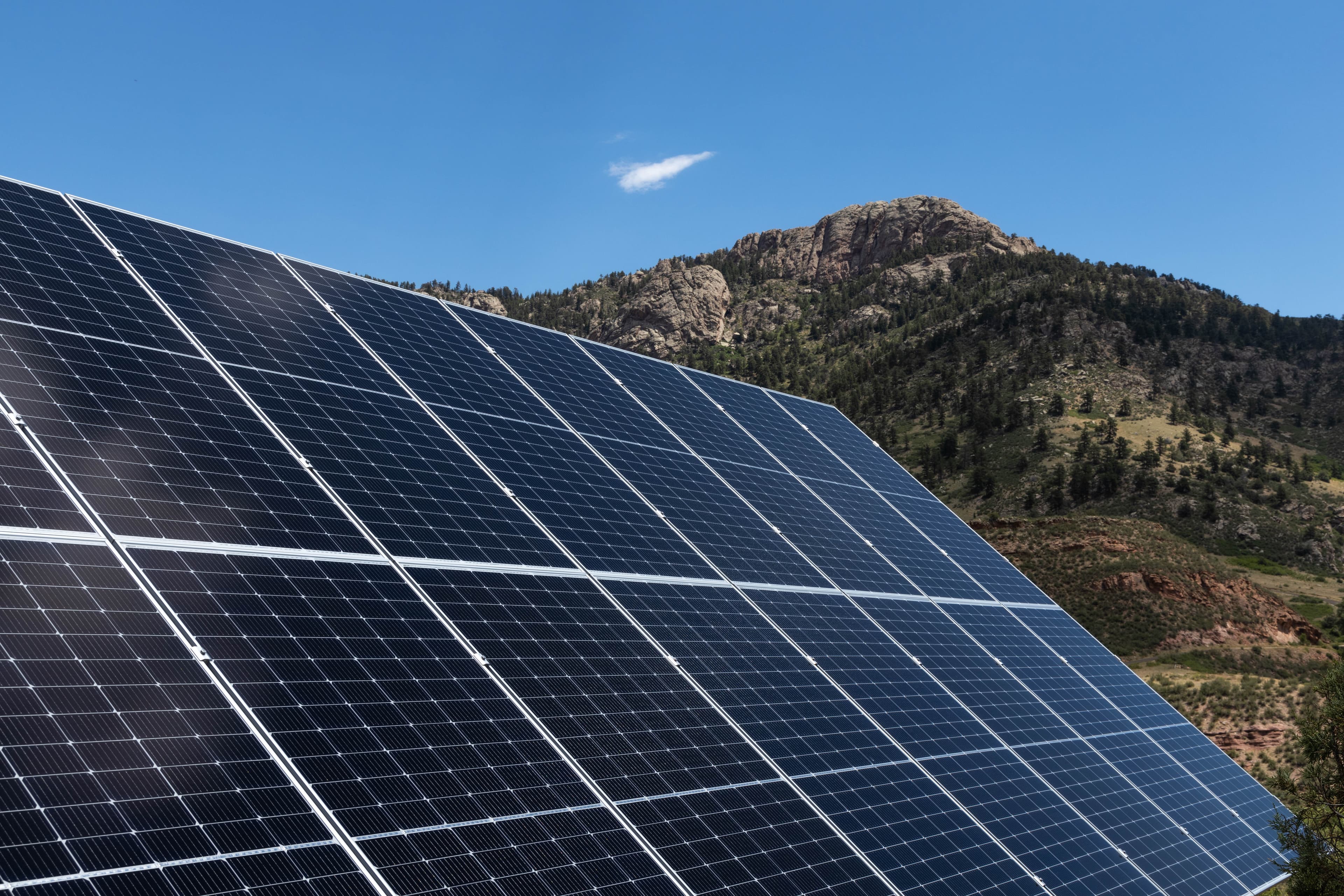
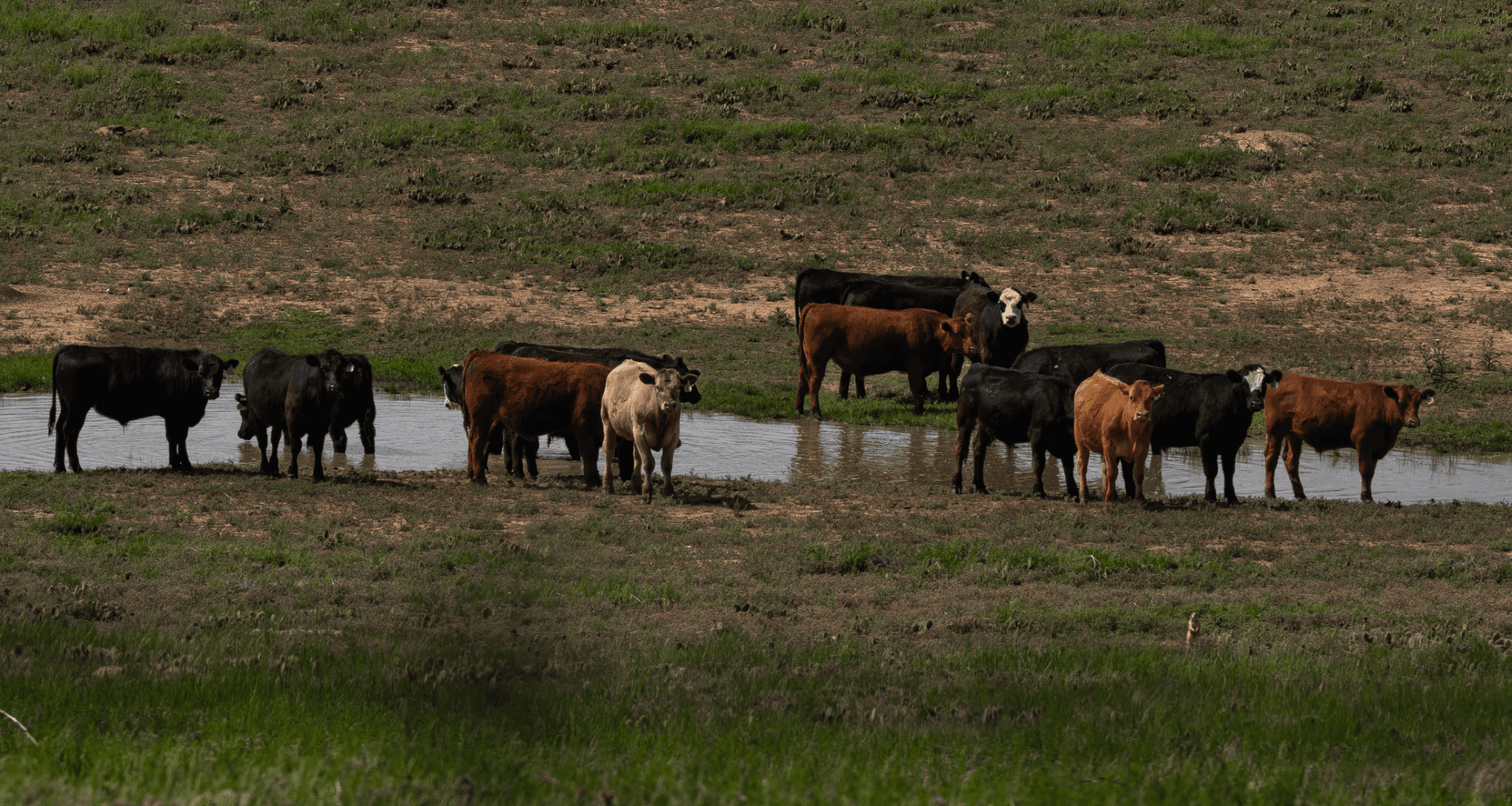
Colorado ranchers face a never-ending litany of pressures from increasing extreme environmental events to a destabilized market; the traditional Western way of life is becoming harder to maintain. According to the U.S. Drought Monitor, 70.40% of Colorado is currently experiencing a drought.¹ Reduced water rights, coupled with market volatility from imported beef, are contributing to the national herd being at a 75-year low.²
Limiting or decreasing your herd head comes at a loss to your operation. Yet, land costs are not decreasing, and neither are input costs. Forcing ranchers to work jobs off farm, sell land to development, resulting in urban sprawl, or even worse, to shut down operations for good.
Conservation programs such as the Grassland Conservation Reserve Program have been significantly cut, which once served as a lifeline for many producers. Traditionally, this program allocated $13 per acre for grassland conservation, a small yet mighty amount to bolster farms, now at $3-$5 per acre, the juice is no longer worth the squeeze.³
Here's the twist: what if producers looked to partner with private businesses to secure your farm's future rather than relying on often short-lived government contracts? Leasing your land to a solar developer may pay anywhere from $200 to $2000 per acre over a long-term fixed contract. And even better, what if it comes as a benefit to your rangeland ecosystem and cattle health?
Flavors of Agrivoltaics
Agrivoltaics, the integration of agriculture and photovoltaics (solar energy), promotes long-term stability for farmers and producers through the production and sale of renewable energy. In our last blog, Agrivoltaics for Dairies: 'Milking' the Benefits of Dual-Use Solar, we explored the tangible benefits that cattle experience as a product of a solar array.
In short, land-grant universities have found agrivoltaics to serve as a safe and responsible method of heat abatement for cattle. Eliminating heat stress experienced by cattle can reduce mortality and increase weight gain. An article from the Angus Journal found that cattle provided with shade reached their final weight three weeks early, which correlated to an "$18 per head profit".⁴ As mentioned, Colorado has been facing extreme droughts in previous years, forcing the consolidation of herd heads due to limited water resources. Research from Colorado State University shows that forage growth underneath agrivoltaic systems has a positive impact on yield during dry years, promoting water use efficiency for Colorado rangeland.⁵
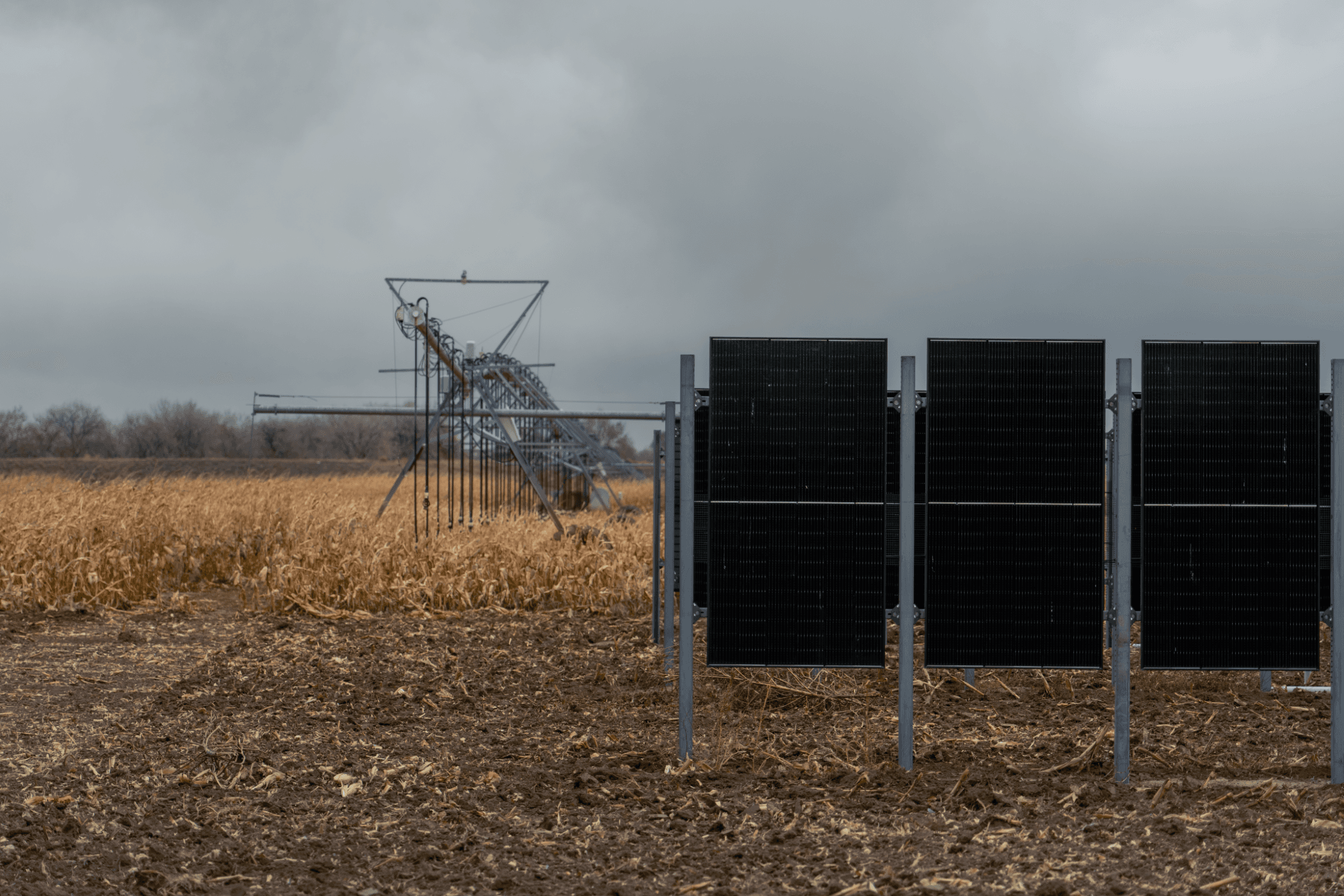
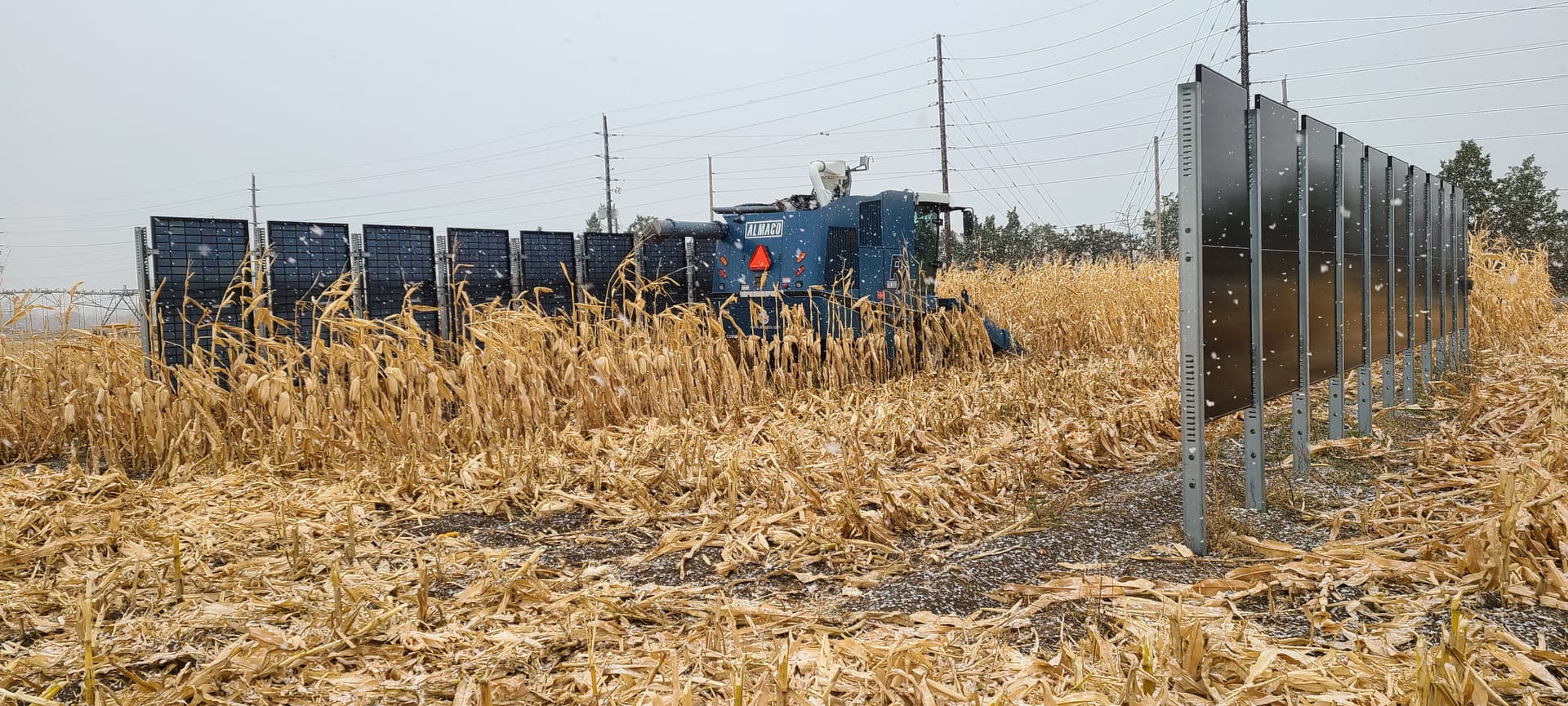
Agrivoltaics takes many forms. From small-scale systems that feed on-site usage, to hundred-acre projects that feed entire communities. Solar configurations typically change depending on the agricultural practice. Row cropping may lend itself to vertical "solar fences" to allow for interoperability with farm equipment such as combines.
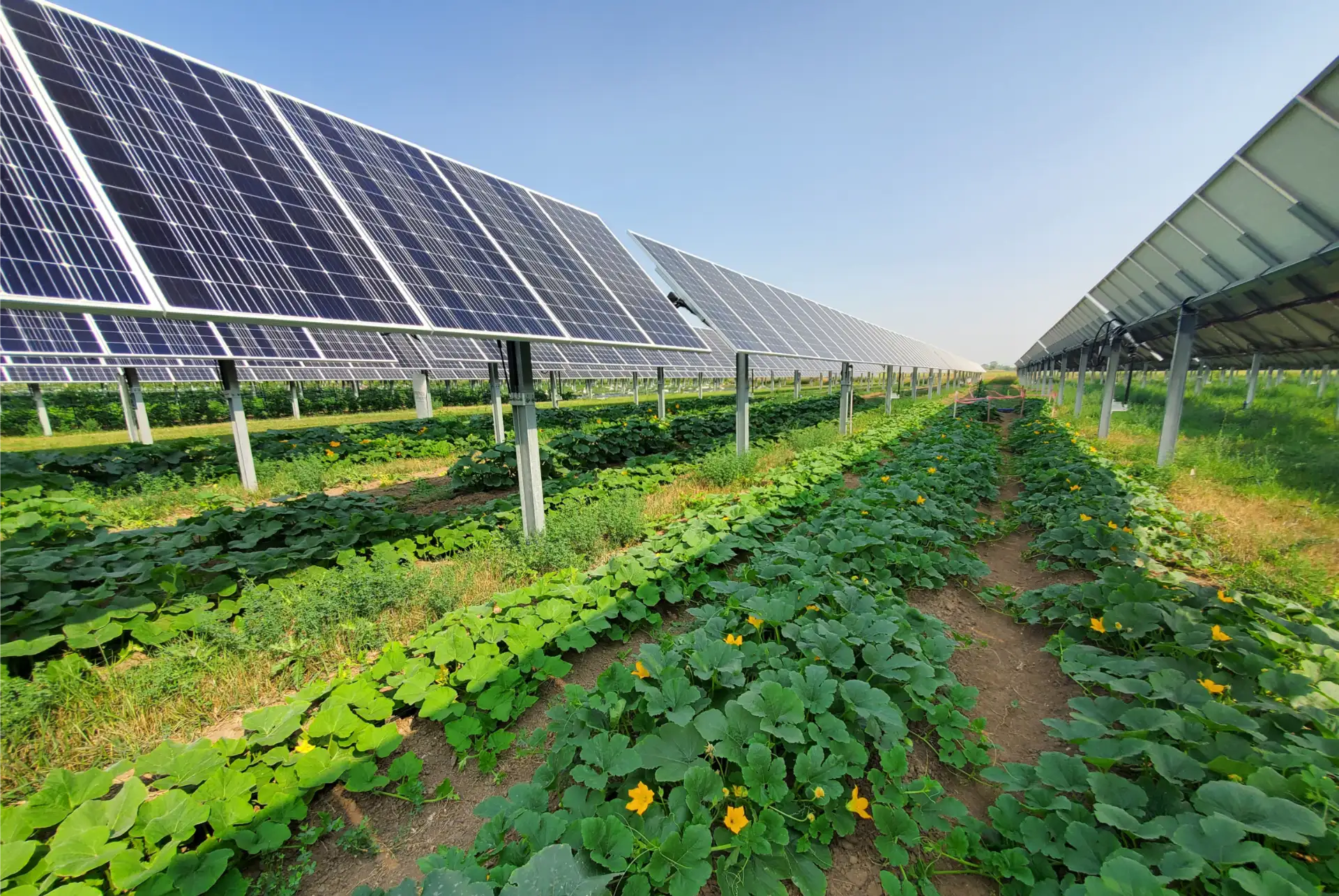
Specialty and horticulture crops may use raised canopy structures to provide selective shade.
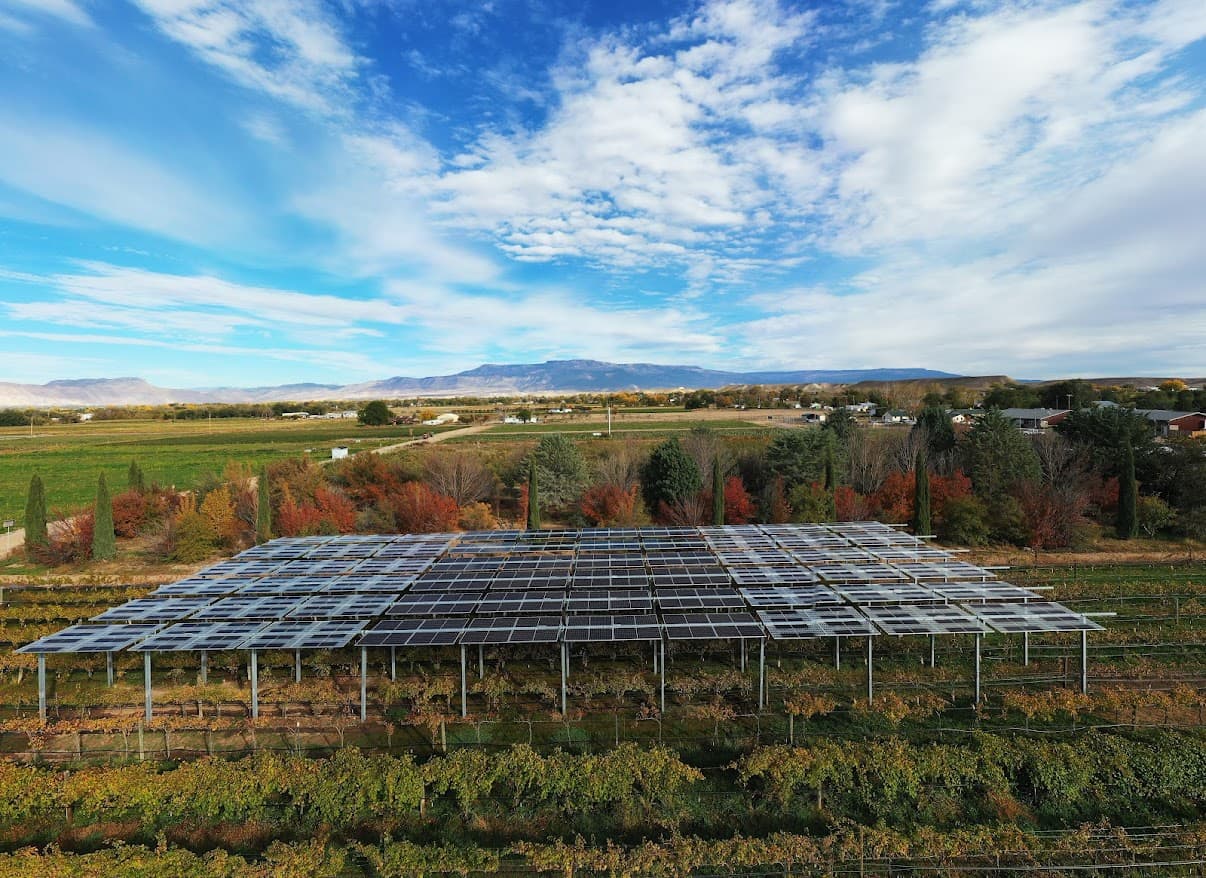
Credit: Douglas Dean, Colorado State University Extension
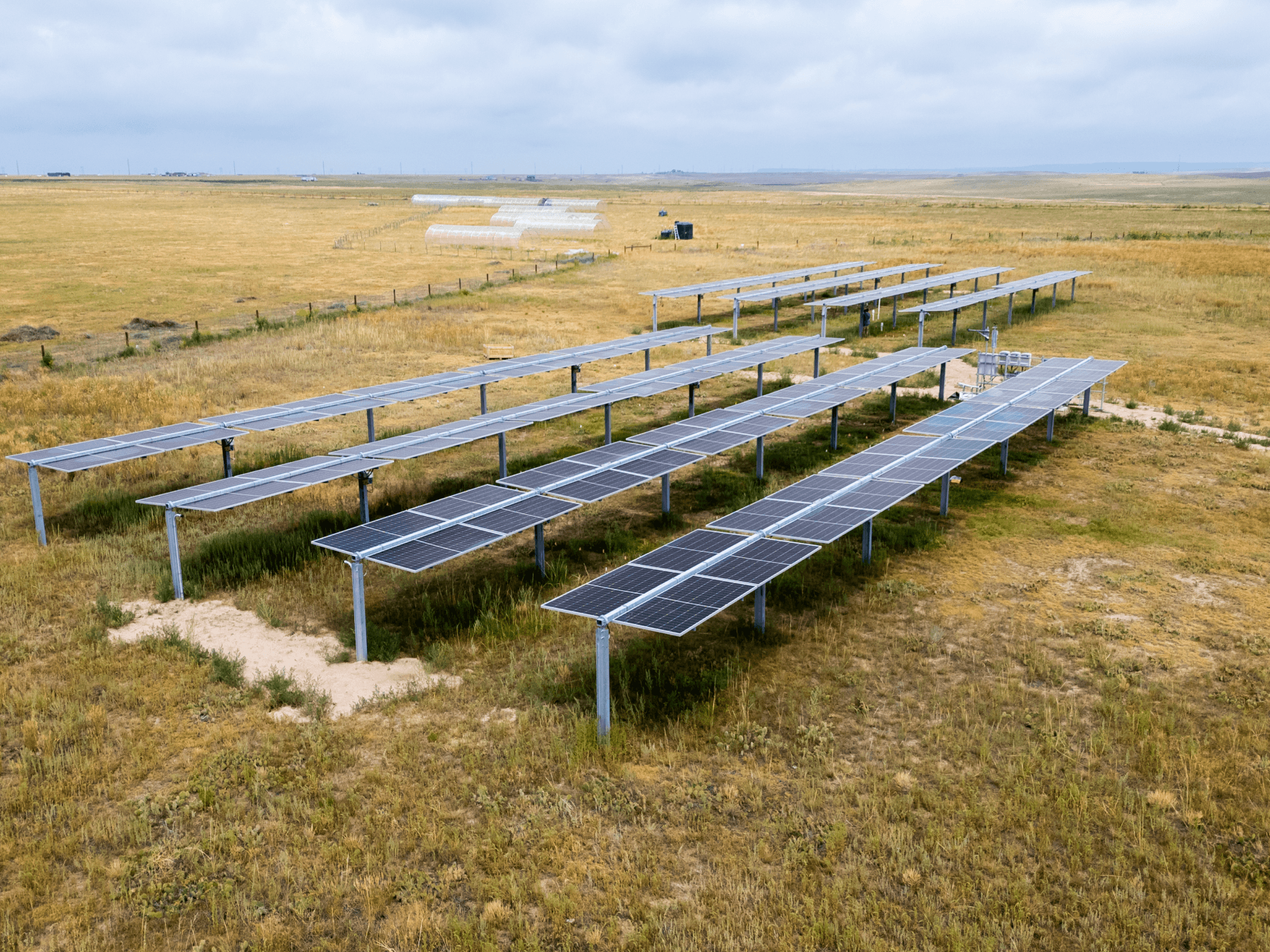
Livestock systems, such as sheep or cattle, are generally well-suited for large-scale single-axis tracker solar configurations.
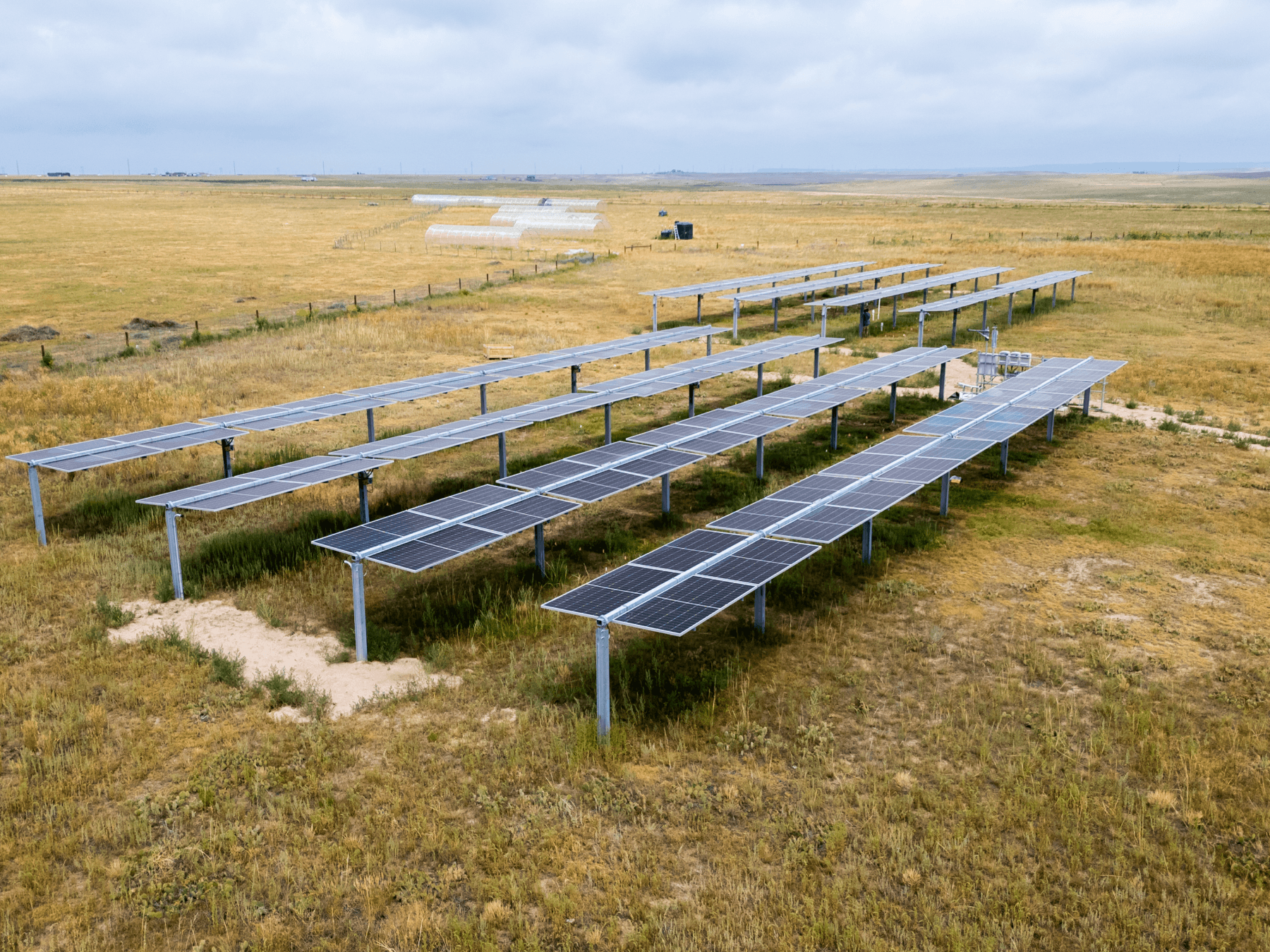
Design typically differs based on the agricultural practices, system size, and location! Very rarely do we see agrivoltaic projects with cookie-cutter dimensions.
To determine how agrivoltaics may fit your ranch, it is essential to understand the methods and economics behind various solar energy utilization approaches.
Behind-the-Meter Solar
When one commonly thinks of solar energy, they typically envision what the industry calls Behind-The-Meter (BTM) solar. In this instance, solar panels are deployed on a home, business, or farm to supply energy to that location. These projects prioritize offsetting energy self-consumption to achieve cost savings while providing backup power, essential during times of grid shutdowns that are increasingly common in Colorado.6 This method works reliably when a location has significant energy consumption that can justify the cost of a solar installation.
If your energy consumption is moderate to low, another option presents itself: in-front-of-the-meter solar.
Front-of-the-Meter Solar
Another avenue in the solar industry is large-scale solar development that feeds electricity into the grid, commonly referred to as In-Front-of-the-Meter (FTM) solar. These projects are typically on a larger scale, enhancing grid stability while managing large energy flows. FTM projects extend the benefits of agrivoltaics across an entire operation, providing greater benefits than a small-scale BTM system.
With proper management, FTM projects tremendously help producers secure long-term financial stability. In this case, a solar developer, such as Sandbox +, constructs, manages, and finances the project. Through this process, landowners who host these sites are paid annually per acre over a long-term period (typically 25 years or more).
FTM projects send energy to the local utility or through a community subscription platform. Covered in more detail below.
Community- vs. Utility-Scale Solar
As mentioned, FTM projects deliver energy to one of two entities: a local utility or community subscribers. When a local utility enters an agreement to purchase the energy produced at a site, this is commonly referred to as Utility-Scale Solar.
Community Solar is a similar yet different approach; in this instance, produced energy is sent to local homes and businesses that may not be viable for solar at their site. Factors such as the age of a roof, sun exposure, and excessive shading can make a site ineligible for solar. Through community solar platforms, ineligible locations can subscribe to receive renewable energy from these facilities. In this process, a subscriber pre-purchases a set amount of electricity (kWh) to be virtually allocated and subtracted from their utility bill, often delivered at a discounted price. Quite literally in the name, community solar farms bolster communities by producing and supplying energy locally, uplifting local economies.
Enhancing Farm Viability
All this sounds great, but oftentimes these projects lack proper community engagement. At Sandbox +, we pride ourselves on working in the communities that we live in. As such, we take extra caution to ensure our projects support rather than detract from local jobs and employment. With 10+ years of experience, we have built relationships across the energy industry, having close ties to local utilities and jurisdictions.
Since 2018, we have been deeply integrated within CSU's agrivoltaic research projects, developing research sites such as the Semi-Arid Grassland Research Center (SAGRC), the Agricultural Research, Development and Education Center (ARDEC), and, most recently, at the Western Colorado Research Center (WCRC). This experience has provided us with extensive applied knowledge and the ability to respect your land to the highest value.
Interested in learning more about agrivoltaics? Check us out here!
Want to evaluate the viability of your ranch? Contact us here!
Citations
¹“United States Drought Monitor > Current Map > State Drought Monitor.” n.d. Droughtmonitor.unl.edu. https://droughtmonitor.unl.edu/CurrentMap/StateDroughtMonitor.aspx?CO.
²“Secretary Rollins Announces Plan for American Ranchers and Consumers.” 2025. Usda.gov. October 22, 2025. https://www.usda.gov/about-usda/news/press-releases/2025/10/22/secretary-rollins-announces-plan-american-ranchers-and-consumers.
³VandenEinde, Emma. 2025. “‘Can’t Afford to Do It for Free Forever:’ Local Ranchers Face Cuts to Grassland Conservation Program.” KUNC. July 28, 2025. https://www.kunc.org/news/2025-07-28/cant-afford-to-do-it-for-free-forever-local-ranchers-face-cuts-to-grassland-conservation-program.
⁴“Shade Benefits Feedlot Animals’ Well-Being, Performance Animal Welfare.” 2018. Api-Virtuallibrary.com. 2018. https://www.api-virtuallibrary.com/isbcw-2010/ShadeBenefitsFeedlotAnimalsWell-beingPerformanceAnimalWelfare.htm.
⁵Sturchio, Matthew A, Steven A Kannenberg, and Alan K Knapp. 2024. “Agrivoltaic Arrays Can Maintain Semi-Arid Grassland Productivity and Extend the Seasonality of Forage Quality.” Applied Energy 356 (February): 122418–18. https://doi.org/10.1016/j.apenergy.2023.122418.
⁶Tingley, Cassis. 2026. “Are Unplanned Xcel Blackouts on the Rise in Colorado?” The Colorado Sun. January 19, 2026. https://coloradosun.com/2026/01/19/are-unplanned-xcel-blackouts-on-the-rise-in-colorado/.
Article by Jack Donovan