The Good, The Bad, and The Ugly: A Review of 2025
What a year, read along as we highlight the many ups and downs of the solar + agriculture industry in 2025.
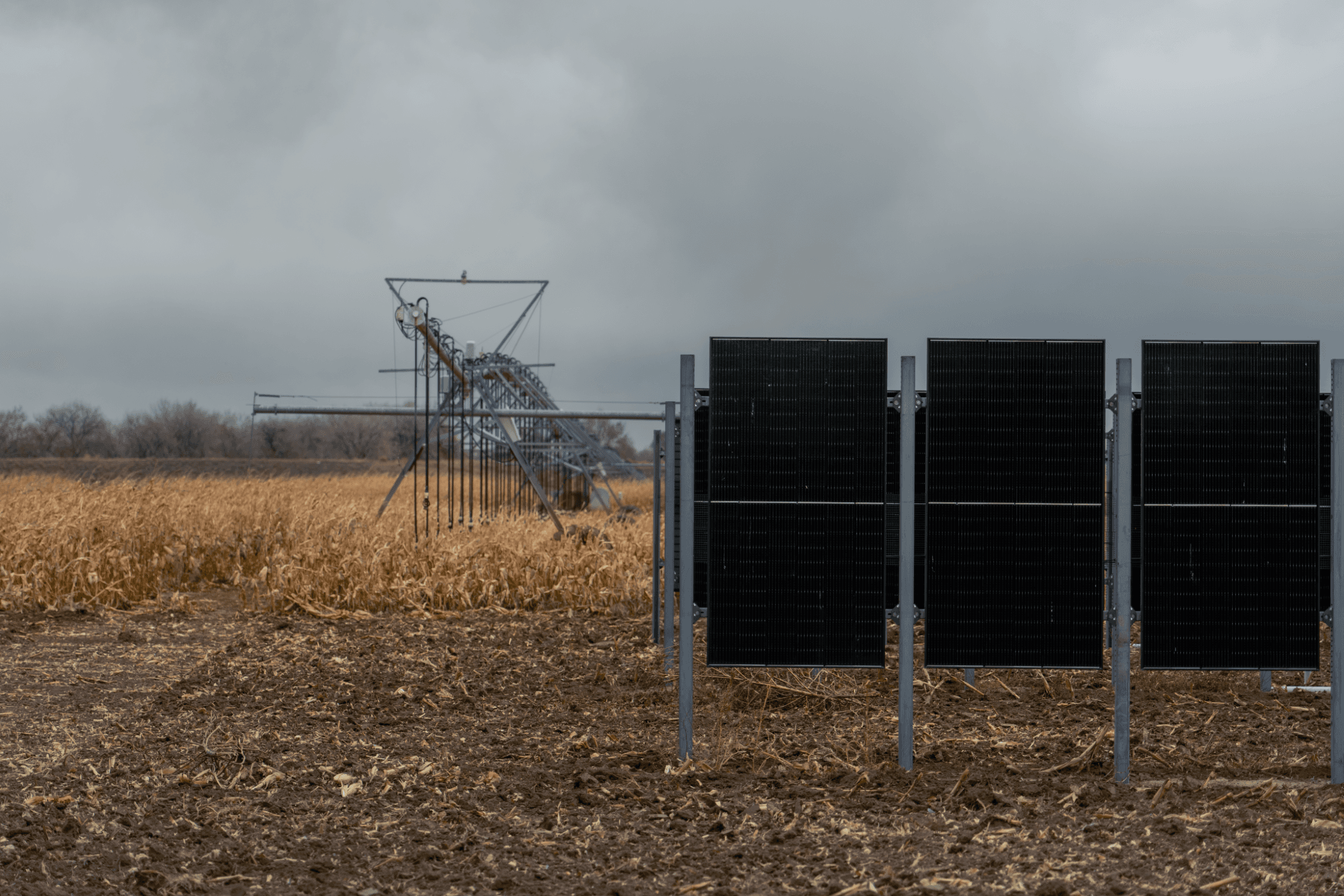
As we ease, or maybe even stumble into 2026, those of us in the solar industry will always look back at 2025 as a pivotal year. Funding resources being cut left and right, uncertainty in the supply-chain, and a long list of policy changes made for a dizzying ride on the "solar-coaster". The year ahead will demand change, requiring new methods of solar deployment. Introducing innovative financing strategies, streamlining permitting and interconnection, and managing FEOC restrictions while safe-harbouring projects in the pipeline. At Spade Agrivoltaics, we aim to create personalized and actionable methods to integrate agriculture with new and existing solar projects leading the dual-use movement.
Tailwinds
Across the nation existing programs and policies faced significant cuts across agriculture and clean energy. Yet, states understanding the importance for new energy resources and farmer diversification stepped up to the plate.
- Massachusetts has re-enacted its Solar Massachusetts Renewable Target (SMART 3.0) program allocating feed-in tariff adders for 1.5GW of capacity slated for 2025 and 2026.
- New Jersey's Clean Energy Program announced a new Dual-Use Solar Energy Pilot Program to help finance and incentivize 125MW of dual-use solar deployment.
- The Colorado Department of Agriculture funded a handful of projects across the state through its ongoing Agrivoltaic Research & Demonstration Grant as well as the ACRE3 program.
- NYSERDA allocated over 7 million dollars to co-locate agriculture and solar development through project demonstration and research at Cornell University.
Headwinds
At the federal level, solar and agriculture both faced many challenges.
- The One Big Beautiful Bill Act (OBBBA) accelerated the termination of Tax Credits for solar development, phasing out Sections 25D, 48E, and 45Y years ahead of the original sunset date.
- The USDA canceled its longstanding Rural Energy for America Program (REAP) that has funded handfuls of on-farm dual-use solar projects.
- Asia and other regions faced increased import tariffs on aluminum and solar products, increasing system costs across the board.
Advancements
Alongside the many hurdles experienced by the industry, innovation keeps us moving forward. Below are some projects that caught our attention through unique solutions that scale dual-use solar applications:
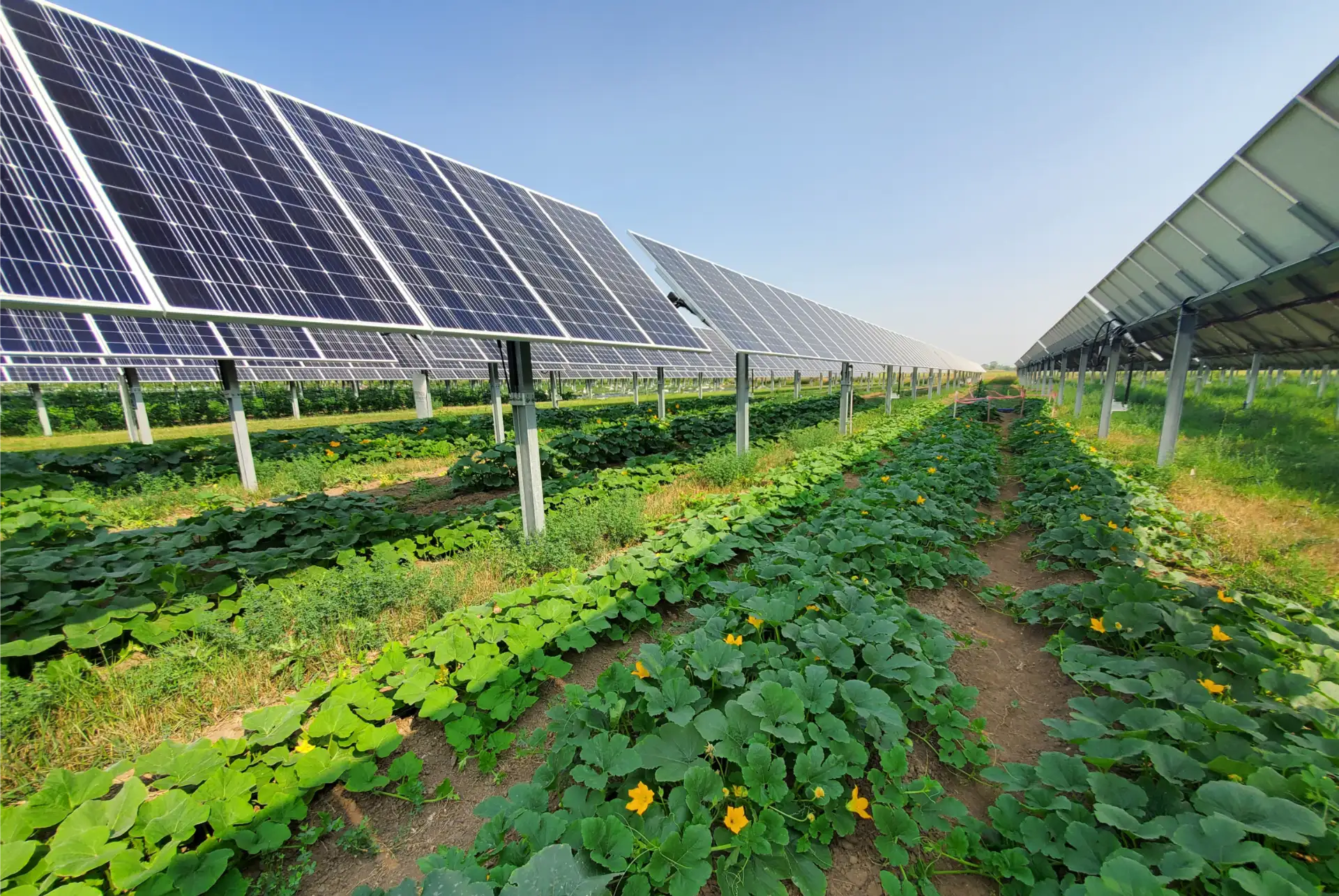
- The Rutgers Agrivoltaic Program (RAP) installed 520kW of solar across 3 research farms. Utilizing fixed tilt, vertical, and single-axis tracking configurations Rutgers is leading the advancement of farming both energy and food simultaneously.
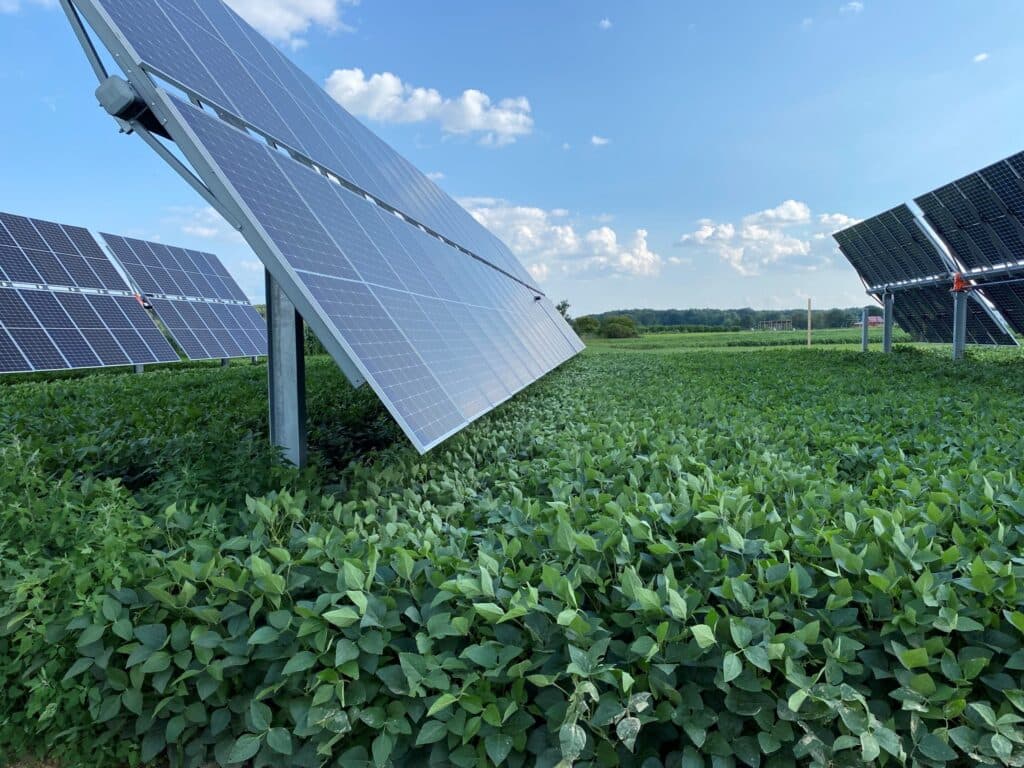
Orginal image from: https://agrivoltaics.rutgers.edu/
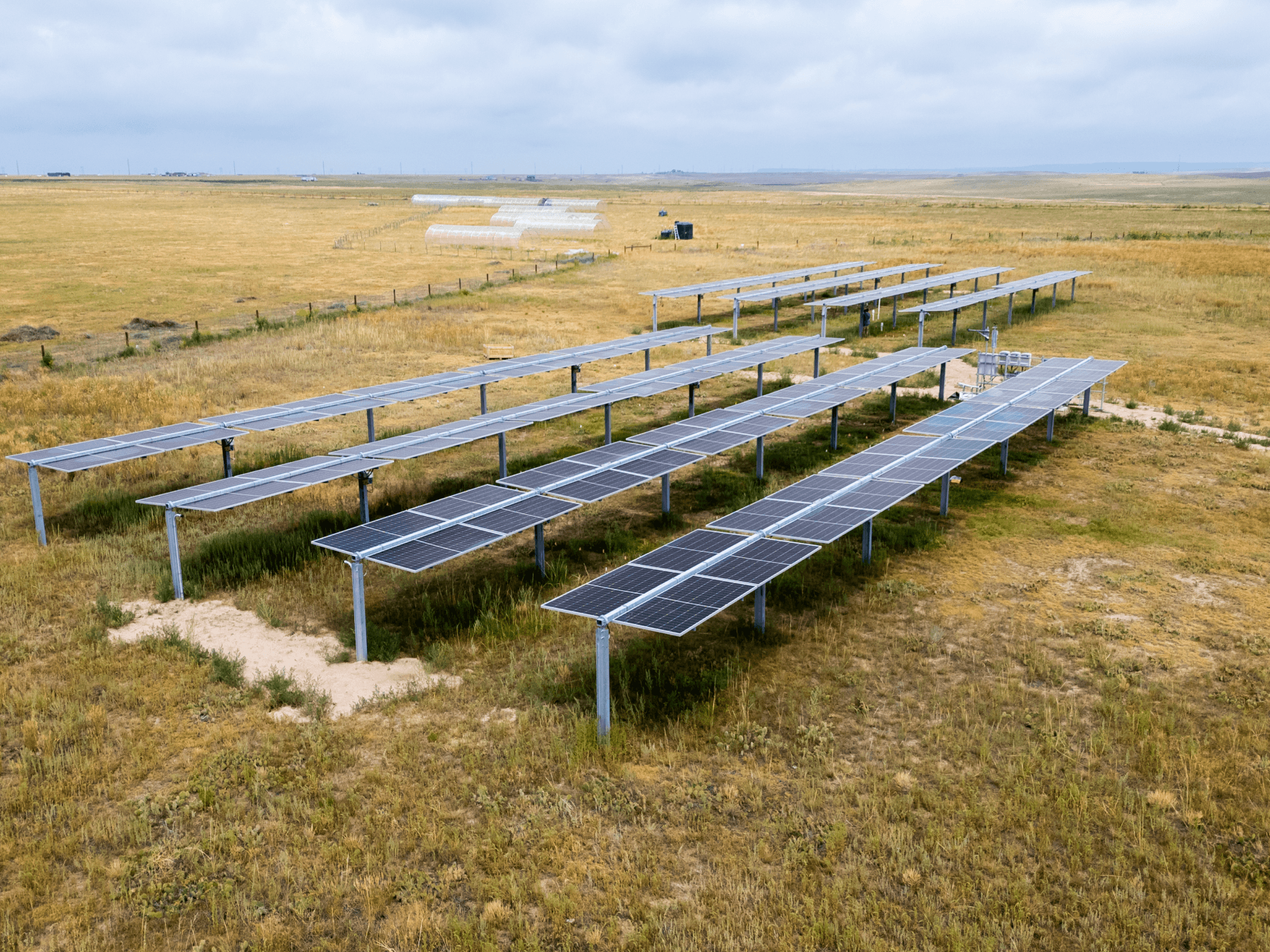
- Colorado State University alongside Sandbox Solar, installed a raised 100kW system over an active research vineyard, featuring both bifacial and semi-transparent panels.
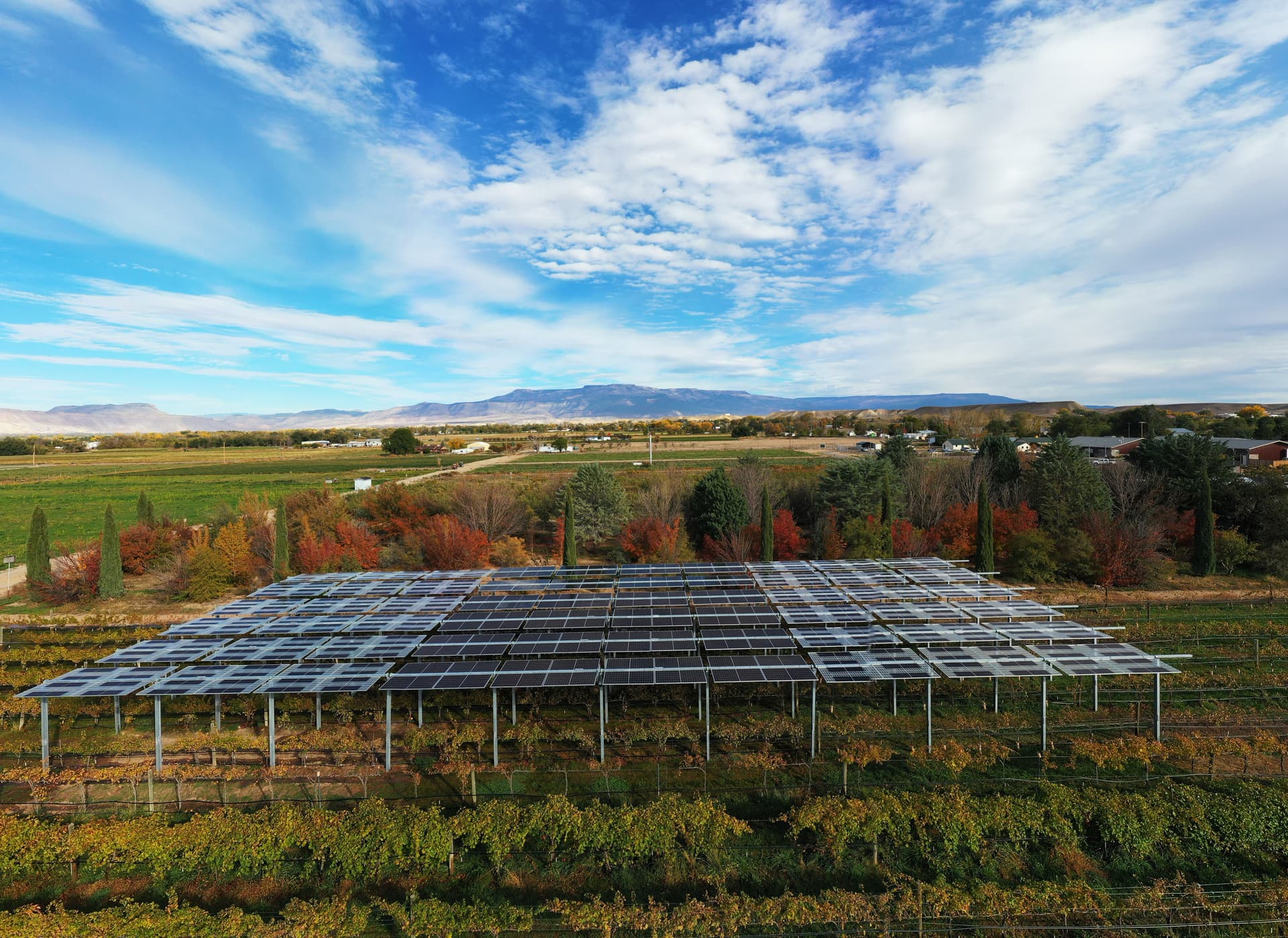
Orginal image from: Douglas Dean, Colorado State University Extension
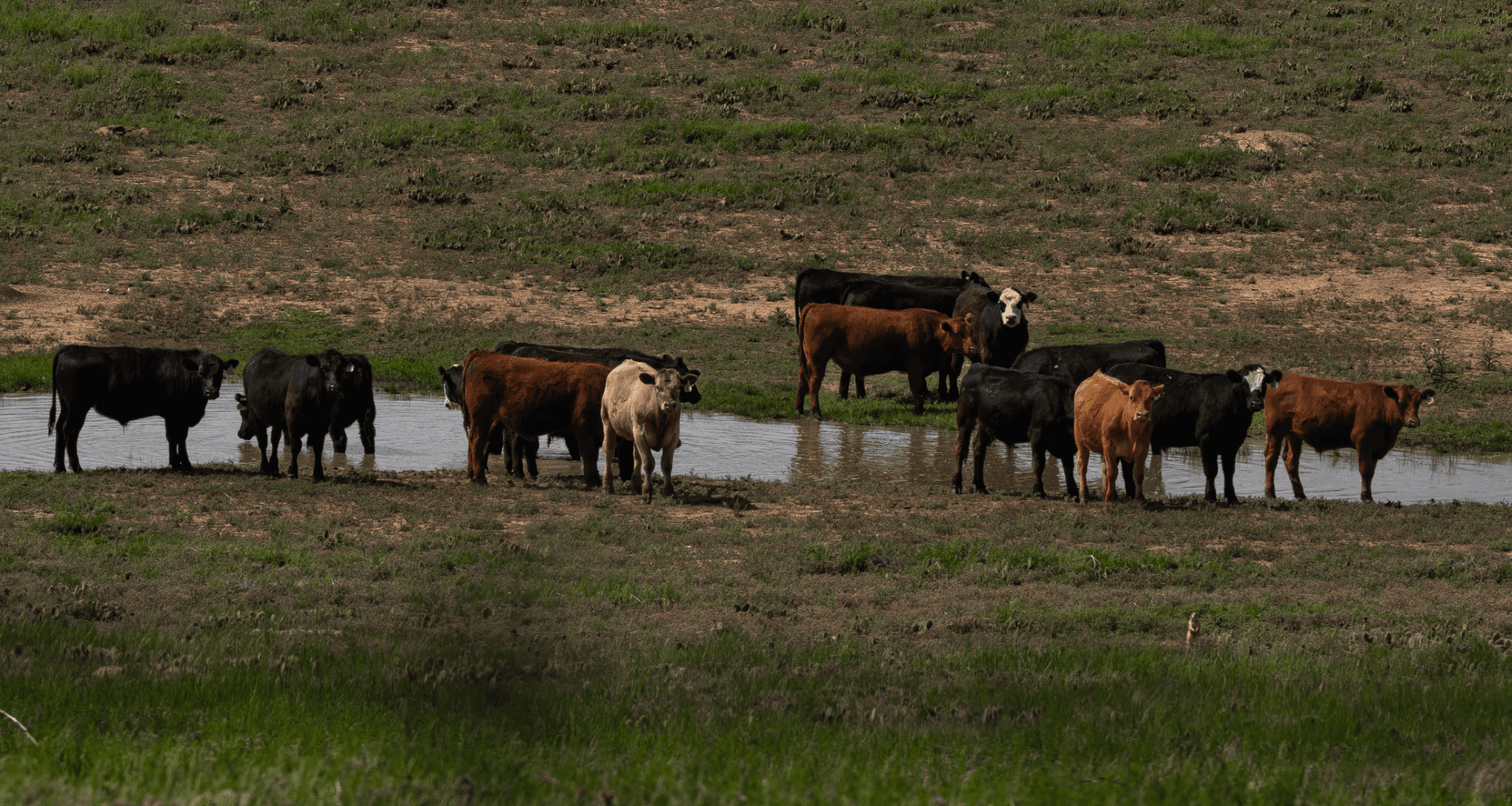
- In Massachusetts, BlueWave Energy developed a 2MW solar array to accommodate cattle grazing and hay production, demonstrating how solar can accommodate large livestock.
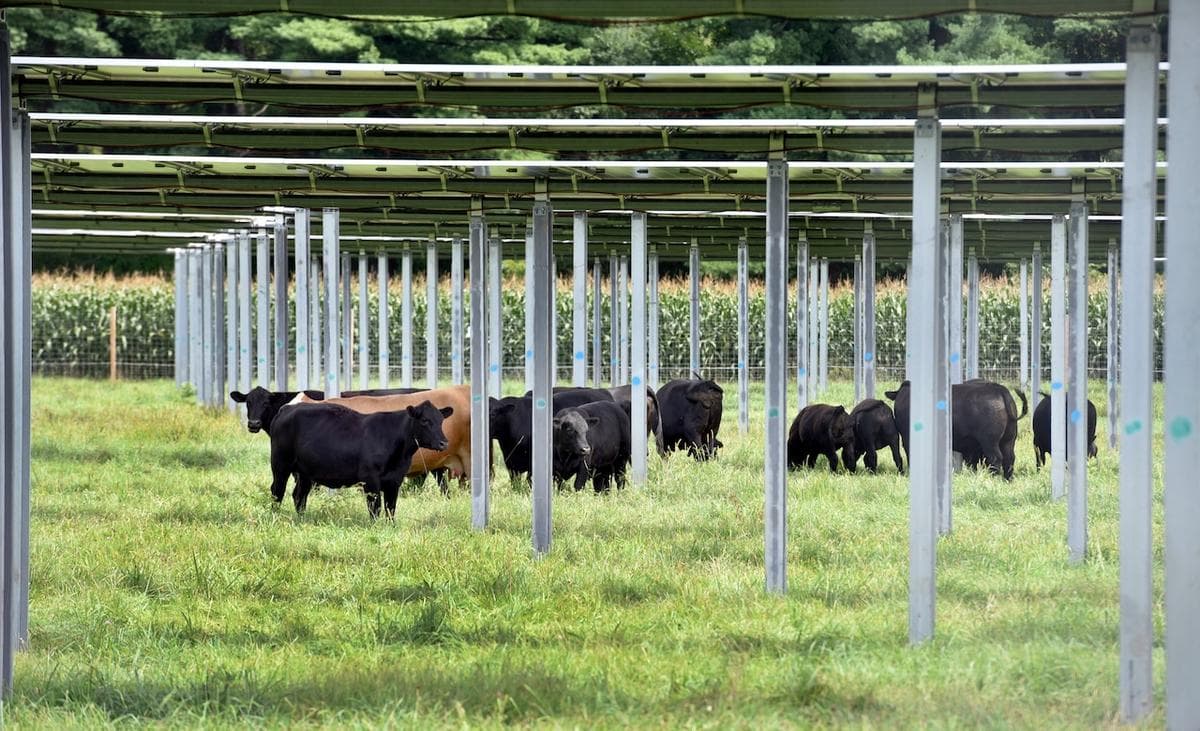
Orginal image from: https://www.masslive.com/westernmass/2024/08/solar-farm-project-in-palmer-has-cows-grazing-under-a-solar-canopy.html
What a Year
Both the agricultural and solar industries faced significant changes in 2025. Daily changes in strategy became routine. Following policy became an essential task. Restructuring our approach to solar development was not a decision instead a requirement. But we did it, we laid out timelines to secure interconnection, overcame permitting, and accelerated construction schedules. The future may not seem clear, but together, as done before the solar industry will continue to shine.
Article by Jack Donovan